An Eagle Scout’s 10 Tips for Camping in the Snow
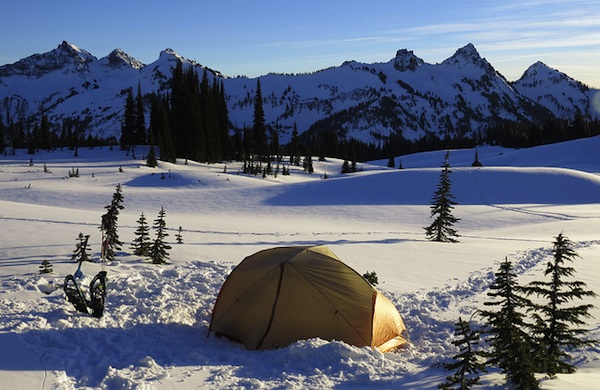
Winter isn’t coming—it’s already here. But a little snow and ice shouldn’t stop you from enjoying the great outdoors. As we’ve already proven with our Fall Camping Guide, camping in the offseason comes with benefits that far outweigh the problem of weather. Of course, planning ahead is an essential part of any winter camping excursion, so we spoke to an Eagle Scout to get ten tips on how to camp in plunging temperatures.
Pack Warm Shoes and Clothes
This normally goes without saying, but you can never be too prepared. The first step is to pack warm, comfortable socks and shoes. If you plan on purchasing a new pair of shoes, make sure to break them in ahead of time so you don’t get blisters. For the rest of your body, cover up whatever you can by layering with long underwear and sweaters.
When Hiking, Watch for Hidden Ice
Exploring the woods in the snow can be a lot of fun—if you take the proper precautions. While trudging through the snow can be physically draining, the real thing you need to look out for is ice. Watch out for flat areas of snow that don’t have brush coming up through them, as these could signify a pond or lake. In general, it’s best to steer clear of bodies of water, as it can be difficult to judge the thickness of the ice.
Cover Your Nose and Count Your Toes
The fingers, toes, and nose are most susceptible to frostbite, and the hardest of these to keep warm are the toes. Campers should cover the skin on their face and hands and always make sure they can feel their toes. If your toes have gone even a little bit numb, it’s time to head back to camp and warm up.
Don’t Sit Too Close to the Fire
If you’ve been out all day, you’ll likely want to warm your toes around a campfire. This is fine, but don’t sit too close to the flames. The rubber soles of your shoes might melt under the heat (it’s happened before).
Bring Plastic and Foam Mats for Insulation
Before you settle down, you’ll need to to put a layer between you and the snow. Find the spot where you want to set up camp, then start shovelling. Once you get closer to the bare earth, you can lay down a layer of plastic and foam mats for insulation. That way, any melting snow won’t sink through and soak your sleeping bag.
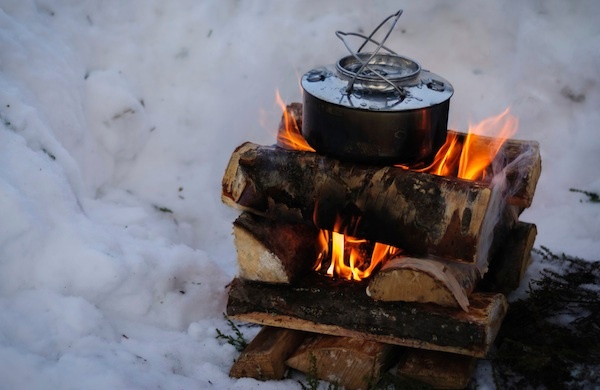
Fire and Snow Don’t Mix
Building a campfire in the snow is a futile endeavor, as soon enough the snow will start to melt and make it almost impossible for the wood to catch. If there’s simply too much snow to dig out a patch of earth, you might want to consider putting your campfire on a raised platform.
Use a Tarp and Layer Your Sleeping Bags
A canvas tent doesn’t cut it in the winter, when the most important thing to worry about is wind. Instead, tie down a tarp to sleep under. This will block out the wind and keep you a little warmer throughout the night. You might also want to think about layering two sleeping bags for extra warmth.
Sleep with Your Smartphone Under Your Pillow
There is such a thing as too cold—at least for battery-powered electronics. Keep your phone and flashlight warm by sleeping with them under the pillow. Temperatures can dip low enough that the battery will stop providing power and die, leaving you in the dark for that late-night bathroom trip.
Bring a Saw for Your Sausage
When camping in the winter, the foods you least expect to freeze will probably freeze. A roll of sausage, for example, can transform into a solid block of ice overnight. To make sure you don’t go hungry, you might want to pack something stronger than a butter knife. For the perfect replacement, look no further than a wood saw.
Have a Backup Plan
Winter camping can be a blast, but you might want to explore your options and make sure it’s right for you. The ideal winter camper is the person who doesn’t mind being completely cold for the entire trip. First-timers can always test their mettle with a half day before committing to the full thing.
Photo: Flickr user hikingqueen

Investigate other things to do in the snow:
All the Types of Sleds and Tubes, Ranked