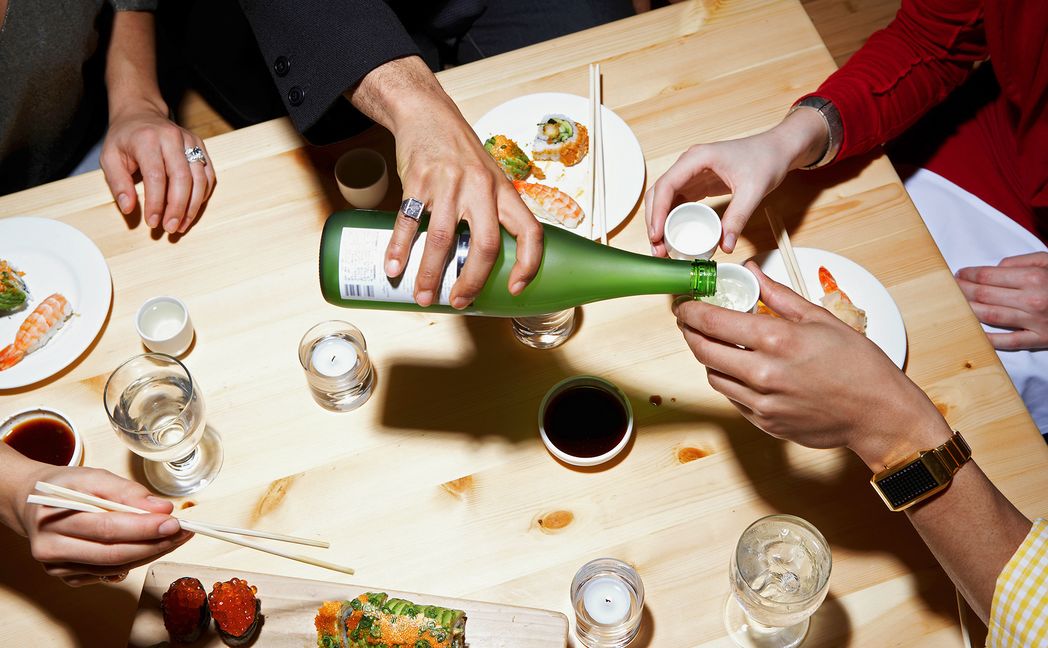
Many diners new to Japanese cuisine might be hesitant about how to drink sake, likely because the ubiquitous drink has is known for being tough to get used to. But like a rugged samurai who keeps a petting zoo, sake's reputation belies its approachability and nuance—traits that most sake experts wish diners could understand.
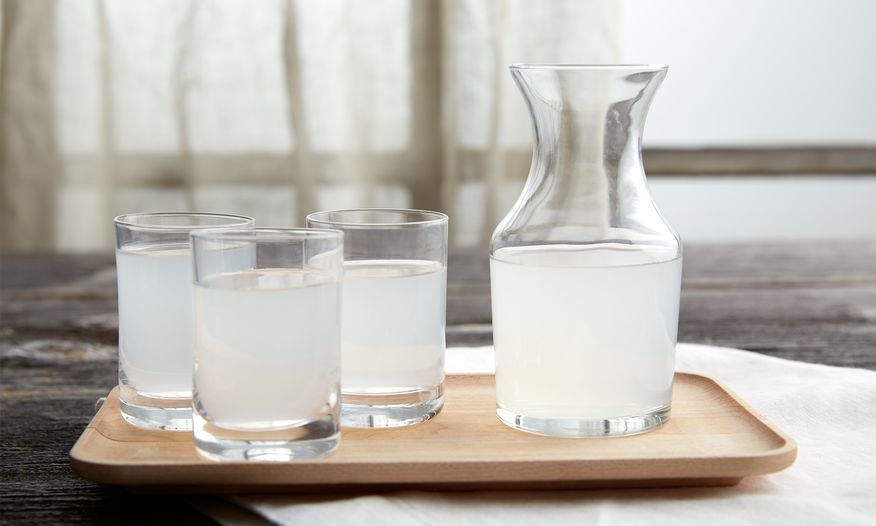
One such expert is John Gauntner who has made a career teaching others about the nuances of and how to drink sake sake: he's a certified sake expert assessor, master of sake tasting, author of several well-respected books on sake, and president of the Sake Education Council. "A lot of people think it's a distilled spirit, or that it's harsh," he says. "But it's only 16% alcohol, which is only 3% more than a robust red wine." Above all, he says, "Sake has much more [diversity in flavor] than most people conceive of."
Below are a few tips, some of which come from Gauntner himself, for even the greenest newbie.
Choose a bottle based on your budget.
According to Gauntner, choosing the best sake is simple: "Basically, the more you pay, the better the sake is going to be." If you already have a preference, that should be a factor as well—"if you like dry sake . . . you're better off going with a less expensive dry sake" than a more expensive sweet option. But since, as Gauntner says, sake is fairly priced "90% of the time," you can't go wrong with allowing your budget to drive your decision.
Look for the magic word: ginjo.
Sake has five basic types:
-
Junmai: this is the purest type of sake, which makes it heavier, fuller, and more acidic; it's good served warm or at room temperature
-
Honjozo: because a small amount of brewers alcohol is added during fermentation, it's lighter and drier—and more fragrant; best served warm
-
Ginjo: made from polished rice, this type of sake is a labor of love—resulting in a complex, delicate, and often fruity or flowery flavor, which comes through best when served cold
-
Daiginjo: a type of ginjo, but the rice is polished longer, so it's even more fragrant; its precise and painstaking brewing methods make this what some would call the ne plus ultra of sake, which is often reflected in the price
-
Namazake: unpasteurized sake, served and stored cold to preserve its clarity and fresh, sweet flavor
Keeping these in mind, Gauntner says a fool-proof method of choosing sake is to look for the word ginjo on the label. "You're drinking the top 10% of all sake. Drink ginjo and you're sure to be drinking good stuff."
Pair it with just about any food . . .
While fish and veggies are an obvious choice, Gauntner claims that its lack of tannins and acidity make it super food friendly. "Even lightly grilled meats, if the sauces aren't too intense, go well with some styles of sake."
. . . except with barbecue.
While it usually doesn't clash with food, it can be "overpowered" by certain flavors, says Gauntner. "Avoid stronger dishes, like really spicy things like Indian or Thai food. A big, sloppy barbecue [dish] probably would not go well with sake either."
 Nigiri vs Sashimi vs Maki: What's the Difference?
 What is Umami? A Guide to the Most Mysterious Flavor
 When You Dine Omakase, the Sushi Chef's in Charge