What is nonsurgical laser lipo?
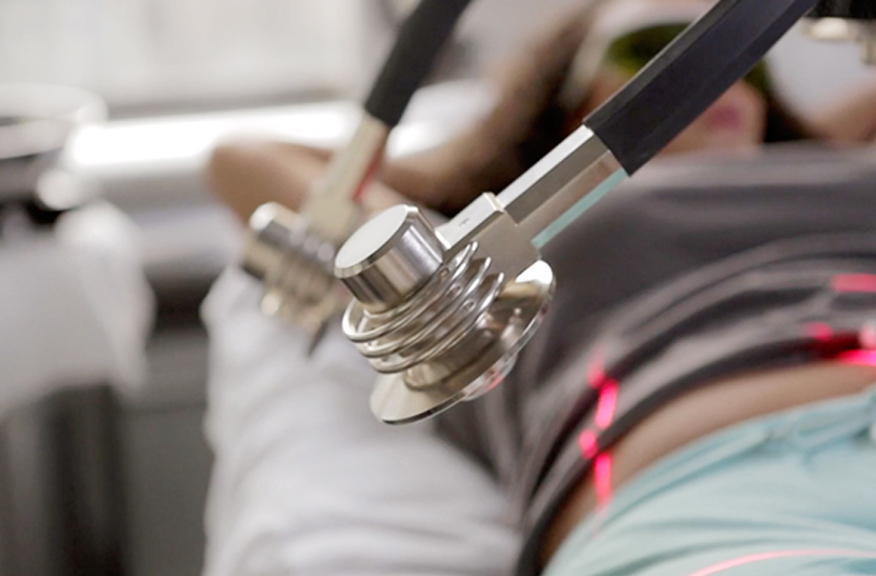
Nonsurgical, or noninvasive, laser-lipo treatments send laser light into the body to get rid of fat, but they don't require incisions or downtime. Here is what happens during a treatment:
Step 1: Lasers penetrate through the skin and down to the fat cells.
Step 2: Once the laser light hits the fat cells, it creates tiny holes in the fat cells' membranes, causing the fat cells to release their stores of fatty acids, glycerol, and water into the bloodstream.
Step 3: The fat cells shrink in size, which results in a slimmer, more contoured physique.
Step 4: The body transfers the fat-cell waste to the lymphatic system for disposal.
Step 5 (optional): Clients use a body-vibration machine after a laser-lipo treatment to help the body get rid of the waste.
Common nonsurgical laser lipo devices include i-Lipo and Zerona. Read more about the treatments here.
What's the nonsurgical laser lipo recovery time?
None, clients can resume normal activities right away.
How much does nonsurgical laser lipo cost?
Nonsurgical laser lipo treatments can cost as low as $30 each, depending on your city.
What are other common noninvasive fat-reduction options?
- Ultrasonic cavitation: This treatment uses ultrasound waves, instead of lasers, to create holes in the fat cells' membranes and shrink them.
- VelaShape: This treatment uses four technologies—radio frequency (RF), infrared (IR) light, vacuum suction, and mechanical massage—to contour bodies. Vacuum suction and massage rollers draw the skin up so the RF and IR light can better penetrate down to the fat cells. RF and IR light also create holes in the fat cells in order to shrink them. RF may help smooth cellulite by increasing collagen production.
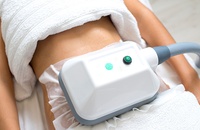
- CoolSculpting: CoolSculpting works a little differently. It uses cooling panels to freeze fat cells until they die. The body then eliminates the dead fat cells themselves from the body. With the other treatments, the fat cells stay in the body in their shrunken form. With CoolSculpting, they are permanently removed from the body.
Can you gain weight after lipo?
Yes, you can still gain fat back after liposuction if you don't exercise and maintain good eating habits. That goes for both surgical and nonsurgical liposuction.
In addition, the treatments themselves work best on people who are already relatively fit and just want to address problem areas that seem to elude the effects of exercise.
So if you want to lose weight and keep it off, it's best to pair a liposuction procedure with a healthy diet and a sustainable fitness routine.
Sources
Sources for this article include the American Society of Plastic Surgeons, as well as the manufacturers of i-Lipo, Zerona, and Smartlipo.


 A Laser Lipo Guide: How It Works, What It Costs, What to Know Before You Go
 How Does Zerona Work?
 What Is Ultrasonic Cavitation and How Does It Work?
 How CoolSculpting Freezes Fat Away
 How to Get Rid of Cellulite